In an age where data flows freely and cyber threats loom large, a silent, vital network of technology often operates beneath the radar, largely unseen by the public eye: Industrial Control Systems (ICS). These are the digital brains behind our power grids, water treatment plants, manufacturing facilities, and chemical processors. Yet, many of these critical systems, originally designed for reliability and operational longevity, now find themselves ill-equipped to handle the sophisticated cyberattacks of today, still running on "legacy" architectures that present significant cybersecurity vulnerabilities.
This isn't just a technical challenge; it's a matter of national security, economic stability, and public safety. Understanding ICS and its inherent security complexities is the first step toward safeguarding the infrastructure that underpins modern society.
At a Glance: What You Need to Know About ICS
- What it is: Industrial Control Systems (ICS) are electronic control systems and associated instrumentation that manage and automate industrial processes, from manufacturing lines to power distribution.
- Why it's critical: ICS are the backbone of essential services like electricity, water, oil & gas, and manufacturing. Disruptions can have catastrophic real-world consequences.
- The core problem: Many ICS rely on older technologies, proprietary protocols, and operating systems never designed with modern cybersecurity threats in mind. They prioritized uptime over airtight security.
- Key types: The umbrella term "ICS" includes Supervisory Control and Data Acquisition (SCADA) systems, Distributed Control Systems (DCS), and Programmable Logic Controllers (PLCs), among others.
- Modernization challenges: Integrating new, connected technologies into existing legacy ICS ("brownfield deployments") creates complex security gaps.
- What's being done: Government agencies like CISA and initiatives like MOSAICS are working with industry to develop better defenses and guidance.
The Unseen Architects: Understanding Industrial Control Systems (ICS)
Imagine a complex orchestra where instruments play in perfect sync to produce a symphony. Industrial Control Systems are the conductors and musicians of the industrial world, orchestrating the countless processes that keep our modern lives running. From the moment you flip a light switch to the water flowing from your tap, an ICS is likely involved.
At its core, an ICS is an electronic system that receives data from sensors measuring process variables (like temperature, pressure, or flow), compares this data against desired setpoints, and then issues commands to control a process via final control elements (such as valves, pumps, or motors). These systems are ubiquitous, silently powering everything from chemical processing plants and pulp and paper mills to power generation facilities, oil and gas operations, and telecommunications networks.
The scale of ICS can vary dramatically. You might find a small, modular controller managing a single operation in a factory, or a vast, interconnected Distributed Control System (DCS) overseeing thousands of field connections across an entire industrial complex. Regardless of size, their mission is consistent: to ensure precise, reliable, and efficient operation of industrial processes.
Decoding the Acronyms: Key Types of Industrial Control Systems
While "ICS" is a broad term, several distinct architectures fall under its umbrella. Each plays a specific role, contributing to the overall control of an industrial process. Understanding these key types is crucial to appreciating the complexity—and the cybersecurity challenges—they present.
Distributed Control System (DCS): The Central Command Center
Think of a DCS as the sophisticated brain of a large, complex industrial plant. These digital process control systems are characterized by their distributed nature: controller functions and field connection modules are spread throughout the system, rather than centralized in one location. This distribution offers remarkable flexibility and resilience.
DCS are particularly cost-effective for managing numerous control loops simultaneously, making them ideal for continuous processes like those found in chemical processing or power generation. They offer supervisory viewing and management over vast industrial processes, enabling centralized control, advanced alarm handling, automatic event logging, and highly flexible configuration of plant operations. DCS often rely on custom processors and communicate over robust digital buses such as Foundation Fieldbus, PROFIBUS, HART, and Modbus, which were engineered for industrial reliability, not necessarily modern internet security.
Supervisory Control and Data Acquisition (SCADA): The Eyes and Ears Across Distances
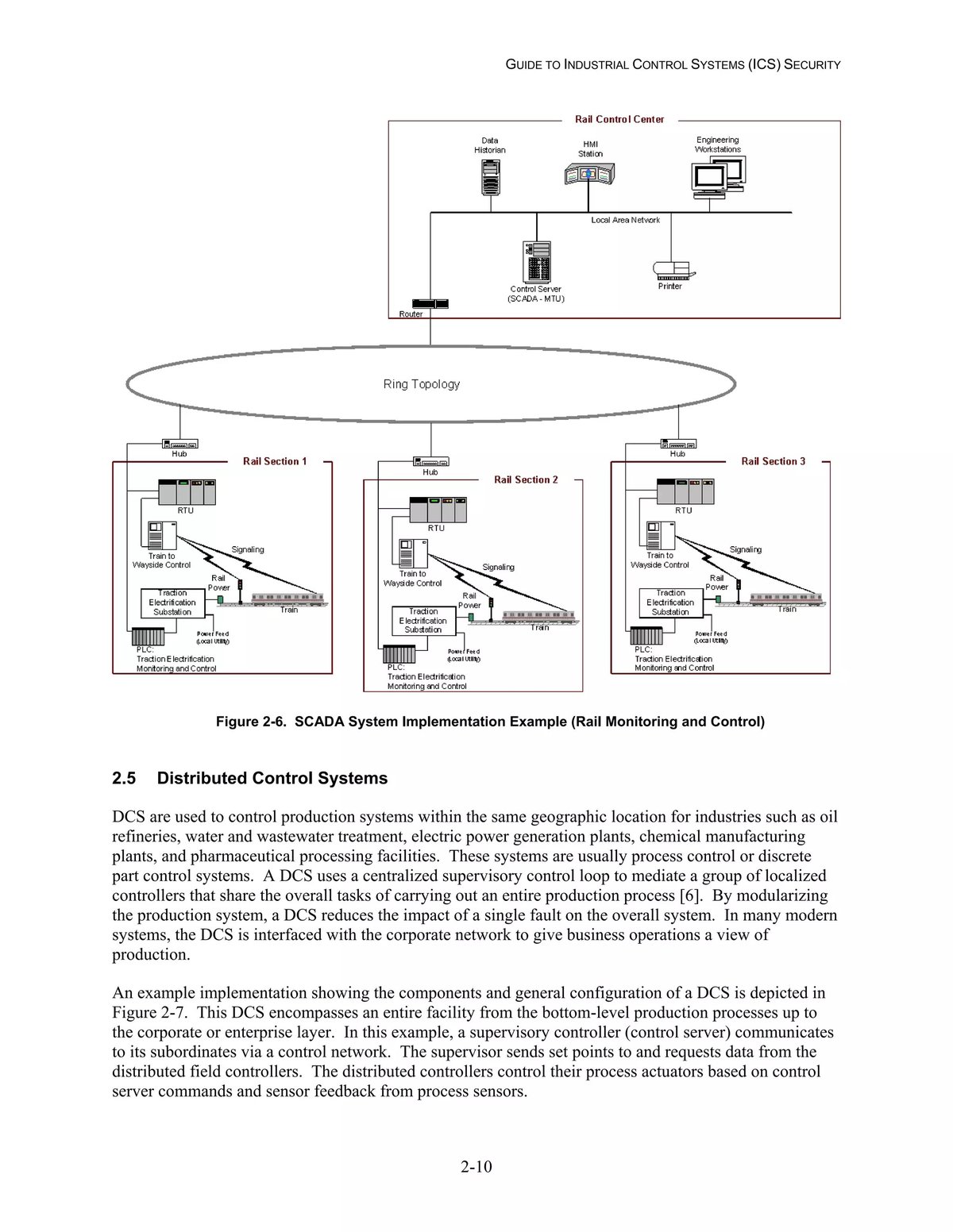
SCADA systems are the overarching managers, designed to provide high-level supervisory management for processes often spread across vast geographical distances. Picture a utility company monitoring power substations across a state or a pipeline operator overseeing thousands of miles of infrastructure – that's SCADA's domain.
A SCADA system typically uses computers, networked data communications, and graphical user interfaces (GUIs) to allow operators to monitor processes and issue high-level commands, such as changing a controller's setpoint. The real-time, low-level control logic, however, is generally performed by local modules like PLCs or Remote Terminal Units (RTUs) that are networked back to the central SCADA system. Their inherent design for remote access, often over less secure communication channels, adds another layer of cybersecurity complexity.
Programmable Logic Controller (PLC): The Workhorse on the Factory Floor
PLCs are the sturdy, no-nonsense workhorses of industrial automation. These robust industrial computers are specifically designed to automate electromechanical processes, replacing older relay-based control panels. They are incredibly resilient, built to withstand harsh industrial environments, offering immunity to electrical noise, vibration, and impact.
PLCs come in various sizes, from compact modular devices with a handful of inputs/outputs (I/O) to large, rack-mounted systems handling thousands of I/O. They are often networked to other PLCs and integrated into SCADA or DCS environments. Their programs are typically stored in battery-backed-up or non-volatile memory, ensuring that even power outages don't erase their critical instructions. PLCs are foundational to discrete manufacturing, batch processes, and even small-scale utility operations.
The Evolution of Control: From Mechanical to Cyber-Physical
The journey of process control has been one of continuous innovation, driven by the need for greater efficiency, precision, and scalability. It began with localized control panels, where operators manually adjusted valves and switches. This evolved into central control rooms, providing a single vantage point for an entire facility.
The true revolution, however, came with the advent of electronic processors and high-speed electronic signaling networks. This paved the way for distributed control systems, utilizing electronic graphic displays to visualize and manage complex processes. A significant milestone was the release of IEC-1131 (later IEC-61131-3) in 1993, which standardized control code and introduced object-oriented programming to industrial control systems.
This standardization catalyzed the development of more advanced platforms:
- Programmable Automation Controllers (PACs): Bridging the gap between PLCs and PC-based control, PACs offer the ruggedness of PLCs with the advanced functionality and data handling capabilities often associated with PCs. They can be programmed in the five standardized IEC languages (ladder logic, structured text, function block, instruction list, sequential function chart) and sometimes even modern high-level languages like C/C++.
- Industrial PCs (IPCs): These are ruggedized personal computers designed for industrial environments. Leveraging powerful multi-core processors and lower hardware costs, IPCs utilize operating systems like Windows IoT. They can integrate analytical tools (e.g., MATLAB, Simulink) directly into the control logic, blurring the traditional boundaries between different ICS types and often bringing with them the same vulnerabilities as general-purpose IT systems.
This evolution has brought incredible benefits, but it also laid the groundwork for the cybersecurity challenges we face today.
The ICS Cybersecurity Conundrum: Why Legacy Systems are a Ticking Time Bomb
Here's the harsh truth: many Industrial Control Systems were simply not designed with modern cybersecurity in mind. When these systems were conceived and deployed decades ago, the primary concerns were operational reliability, safety, and longevity. The idea of a remote hacker attempting to manipulate a turbine or a water pump was largely unthinkable.
Historically, ICS environments operated within "air-gapped" or highly isolated networks, with minimal or no external connectivity. This physical separation was considered sufficient security. This perception led to the widespread use of:
- Outdated Operating Systems: Many legacy ICS devices run on ancient operating systems that are no longer supported by vendors, meaning no new security patches for critical vulnerabilities.
- Proprietary Protocols: These communication protocols were designed for efficiency and interoperability within specific industrial contexts, often lacking fundamental security features like encryption or authentication.
- Default Passwords and Hardcoded Credentials: In many older systems, security was an afterthought, leading to weak or easily discoverable login credentials.
- Limited Visibility: It's often difficult to monitor network traffic or device behavior within legacy ICS environments, making it challenging to detect intrusions.
The consequence? These systems are highly vulnerable to sophisticated cyber threats. As connectivity has increased—driven by the need for remote monitoring, analytics, and integration with enterprise IT systems—the "air gap" has eroded, exposing these fragile systems to a world they were never meant to navigate.
The "Brownfield" Nightmare: Layering Modernity onto Legacy
One of the most significant and pervasive challenges is what's known as "brownfield deployments." This refers to the integration of new, digitally native technologies—such as building management systems, energy management systems, IoT devices, advanced automation, and robotics—into existing, often decades-old, legacy infrastructure.
Imagine trying to install a cutting-edge smart home system into a house built in the 1920s using original wiring. It's complicated. Modern Operational Technology (OT) systems demand high-bandwidth and ultra-low latency protocols, which must somehow coexist and communicate with older systems built on entirely different principles. This layering creates complex interfaces and potential new attack vectors. Each point of integration is a potential vulnerability, requiring meticulous consideration of security mitigations and compensating controls to prevent new technologies from becoming a gateway to old, unprotected systems.
The stakes are incredibly high. These vulnerabilities are not just theoretical; SCADA and PLC systems are increasingly targeted in cyberwarfare and cyberterrorism attacks, with the potential to disrupt critical infrastructure and cause real-world damage.
Fortifying the Front Lines: Modern Approaches to ICS Security
Addressing ICS cybersecurity vulnerabilities requires a multi-faceted and ongoing effort, moving beyond the traditional IT security playbook.
Collaboration and Guidance: CISA's Role
The Cybersecurity and Infrastructure Security Agency (CISA) plays a pivotal role in this battle. CISA actively collaborates with the Operational Technology (OT) community to tackle immediate operational cyber events and mitigate long-term risks affecting ICS. They offer a wealth of guidance, services, tools, and training specifically tailored for ICS stakeholders, helping organizations at all levels of cybersecurity maturity bolster their defenses. Their resources are invaluable for any organization operating critical infrastructure.
Innovative Defenses: The MOSAICS Initiative
Recognizing the unique challenges, governments are also investing in cutting-edge research and development. The U.S. Government Joint Capability Technology Demonstration (JCTD) known as MOSAICS (More Situational Awareness for Industrial Control Systems) is a prime example. This initiative focuses on demonstrating advanced cybersecurity defensive capabilities specifically for critical infrastructure control systems, including power, water, wastewater, and safety controls. The MOSAICS prototype aims to pioneer innovative, game-changing capabilities to enhance critical infrastructure cybersecurity, providing hope for more robust future defenses.
Practical Steps for Your Organization
While national initiatives are vital, organizations operating ICS must also implement proactive, practical measures:
- Network Segmentation: This is foundational. Create strict boundaries between your ICS/OT networks and your enterprise IT networks. Use firewalls and other security devices to control traffic flow, limiting connectivity to only what is absolutely essential. Sub-segmentation within the OT network can further isolate critical assets.
- Robust Access Control: Implement strong authentication mechanisms and the principle of least privilege. Only authorized personnel should have access to ICS, and their access should be limited to what is strictly necessary for their role. Multi-factor authentication (MFA) is paramount, even for internal systems.
- Vulnerability Management (with care): While patching legacy systems can be difficult or impossible, it's crucial to identify vulnerabilities. For systems that cannot be patched, implement compensating controls such as network isolation, intrusion detection systems, and rigorous monitoring. For newer systems, maintain a regular patching schedule.
- Secure Remote Access: If remote access is required, implement highly secure methods, such as VPNs with strong encryption and multi-factor authentication. Log all remote access attempts and activities.
- Continuous Monitoring and Anomaly Detection: Deploy specialized ICS-aware security solutions to monitor network traffic and system behavior for anomalies that could indicate an attack. Traditional IT security tools often don't understand industrial protocols.
- Incident Response Planning: Develop and regularly test a comprehensive incident response plan tailored specifically for ICS cyberattacks. Know what steps to take if a system is compromised, how to recover, and how to safely restore operations.
- Personnel Training and Awareness: Human error remains a significant vulnerability. Train your operators, engineers, and IT staff on ICS cybersecurity best practices, social engineering awareness, and the importance of adhering to security protocols.
- Vendor Partnership: Work closely with your ICS vendors to understand the security posture of their products, available updates, and recommended security configurations.
- Bridging the IT/OT Gap: Foster collaboration and understanding between your IT and OT teams. While their priorities differ (IT: confidentiality, integrity, availability; OT: availability, integrity, confidentiality), a unified approach to security is critical.
Common Questions & Misconceptions About ICS Cybersecurity
Navigating the world of ICS security often brings up a host of questions. Here are some common ones:
Q: Is "air-gapping" still effective for ICS security?
A: While physical air gaps can offer a high degree of protection, true air gaps are increasingly rare and difficult to maintain. Even "air-gapped" systems can be compromised via removable media (USB drives), supply chain attacks, or human error. The reality is that most industrial environments now have some form of IT/OT convergence, making complete air gaps impractical. The focus has shifted to robust segmentation and secure gateways.
Q: Can't we just use standard IT cybersecurity tools for ICS?
A: Not entirely. While some IT security principles apply, ICS environments have unique characteristics: different protocols, specific hardware, strict uptime requirements, and potential physical safety implications. Deploying standard IT tools without adaptation can disrupt operations or fail to detect ICS-specific threats. Specialized OT security solutions are often necessary.
Q: Is "security through obscurity" a valid strategy for ICS?
A: Absolutely not. Relying on the idea that an attacker won't understand your proprietary system or outdated technology is a dangerous misconception. Determined attackers will eventually reverse-engineer protocols and exploit vulnerabilities. Transparency and documented security practices are always better.
Q: What's the biggest threat to ICS? External hackers or internal risks?
A: Both pose significant threats. External state-sponsored actors and cybercriminals are a major concern. However, internal threats—whether malicious insiders or accidental errors by employees—can also cause substantial damage. A comprehensive security strategy addresses both.
Q: Is it possible to patch old ICS systems?
A: Often, it's not straightforward. Many legacy ICS devices cannot be patched without significant downtime, risk of system instability, or even voiding warranties. In such cases, organizations must implement compensating controls around the vulnerable systems, like strict network segmentation, intrusion detection, and continuous monitoring, rather than relying solely on patching.
Your Next Steps in Protecting Critical Infrastructure
The challenge of securing Industrial Control Systems is immense, but it's not insurmountable. It demands a holistic, proactive approach that recognizes the unique characteristics of OT environments while leveraging best practices from the IT world.
For any organization reliant on ICS, the path forward involves continuous assessment, strategic investment, and a cultural shift towards security-first thinking. This isn't a one-time project but an ongoing commitment to resilience. Dive deeper into understanding the technologies that power our world and the strategies to protect them. Explore our Forgematica hub for more insights into securing complex systems and critical infrastructure.
By prioritizing cybersecurity in our industrial heartlands, we can ensure that the systems that power our lives remain robust, reliable, and secure against the evolving landscape of digital threats. The future of our critical infrastructure depends on it.